 RUSTAMGULOFF
How AI is Used Against Freedom of Speech
Key points from my presentation at the 26th Central Asian Media Conference of the OSCE: how artificial intelligence is already being used against honest journalism and freedom of speech. With examples, data, and the presentation.
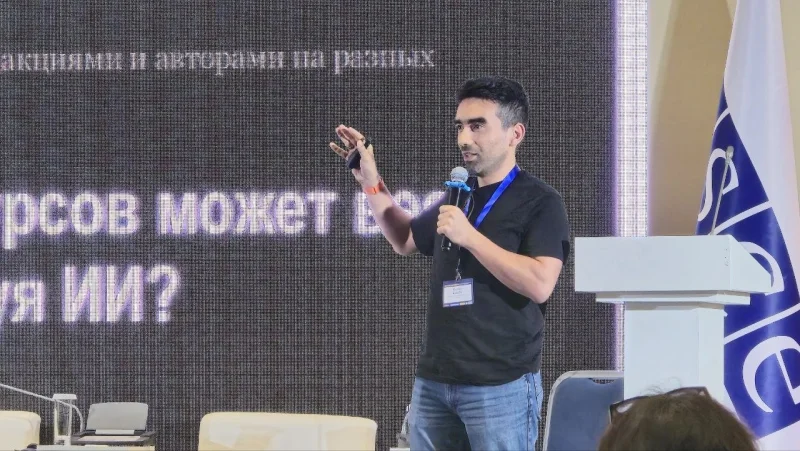
On October 9, I spoke at the 26th Central Asian Media Conference organized by the OSCE Representative on Freedom of the Media. The topic of my presentation is simple yet somewhat alarming - how AI abuses threaten media and freedom of speech. Below, I have compiled the main ideas from my presentation, and at the end, I included the full slides (in Russian). All facts are drawn from publicly available reports and investigations from 2026, which I monitor through my news aggregator Semanticon, and the primary data was sourced from a report by Anthropic on the misuse of their product Claude AI by various actors - from individual hacktivists to propaganda outlets. For this reason, these data cannot be considered a complete reflection of the actual situation. They are intended to slightly broaden our perspectives on the issue and encourage more extensive research into the misuse of AI technologies and methods of protection against them.
What Has Changed in a Year
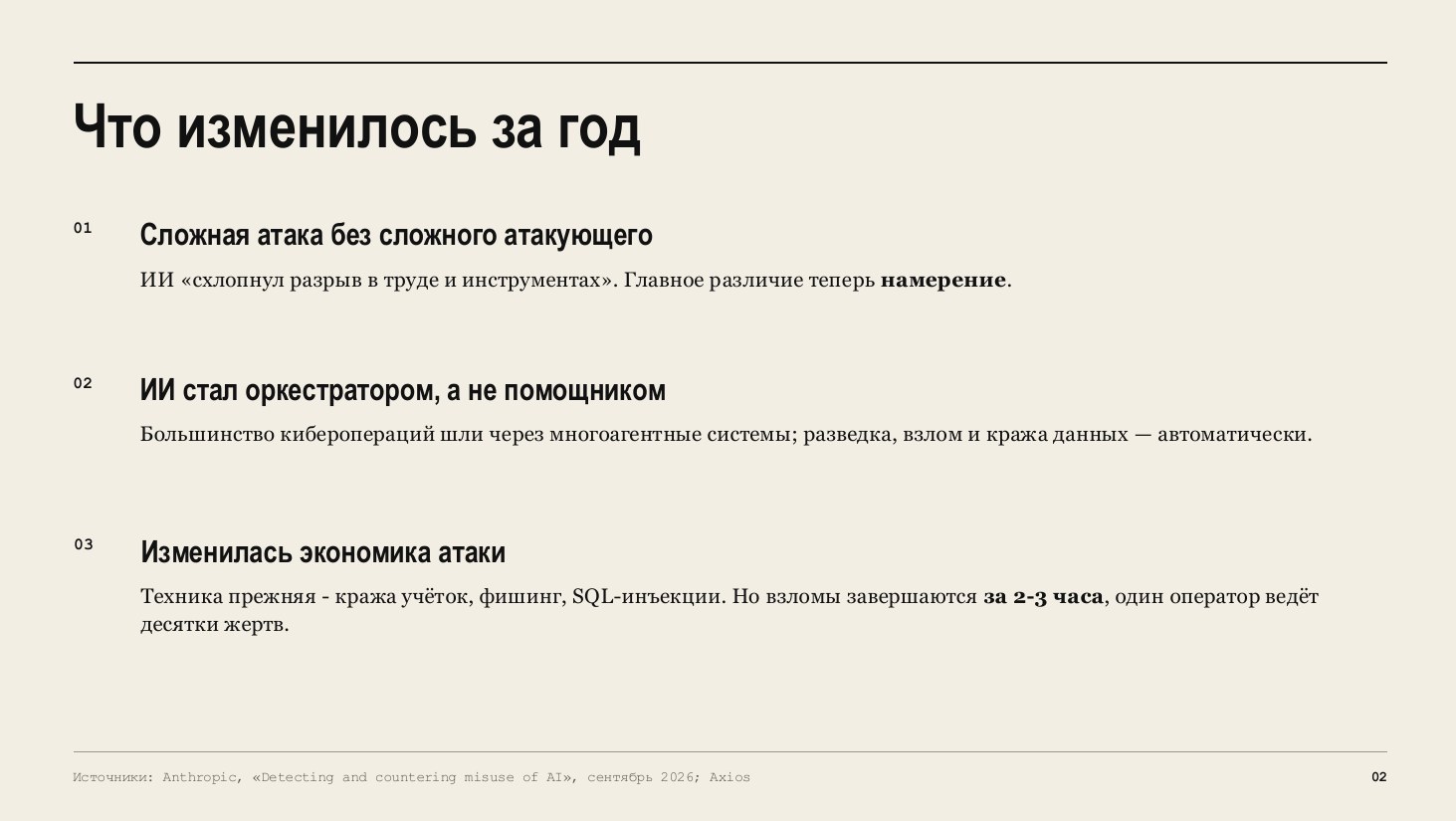
A year ago, we primarily discussed deepfakes and fake texts. Now, the conversation has shifted. AI has learned to conduct entire operations on its own - from spreading propaganda to surveilling individuals and hacking entire systems. The human merely sets the task, and then the program does almost everything.
As a result, a complex attack no longer requires a "complex" executor. Previously, the level of execution could indicate who was behind a campaign. Now, that is no longer the case; what matters is not skill but merely intent and relatively simple skills in using AI resources.
Propaganda Factory
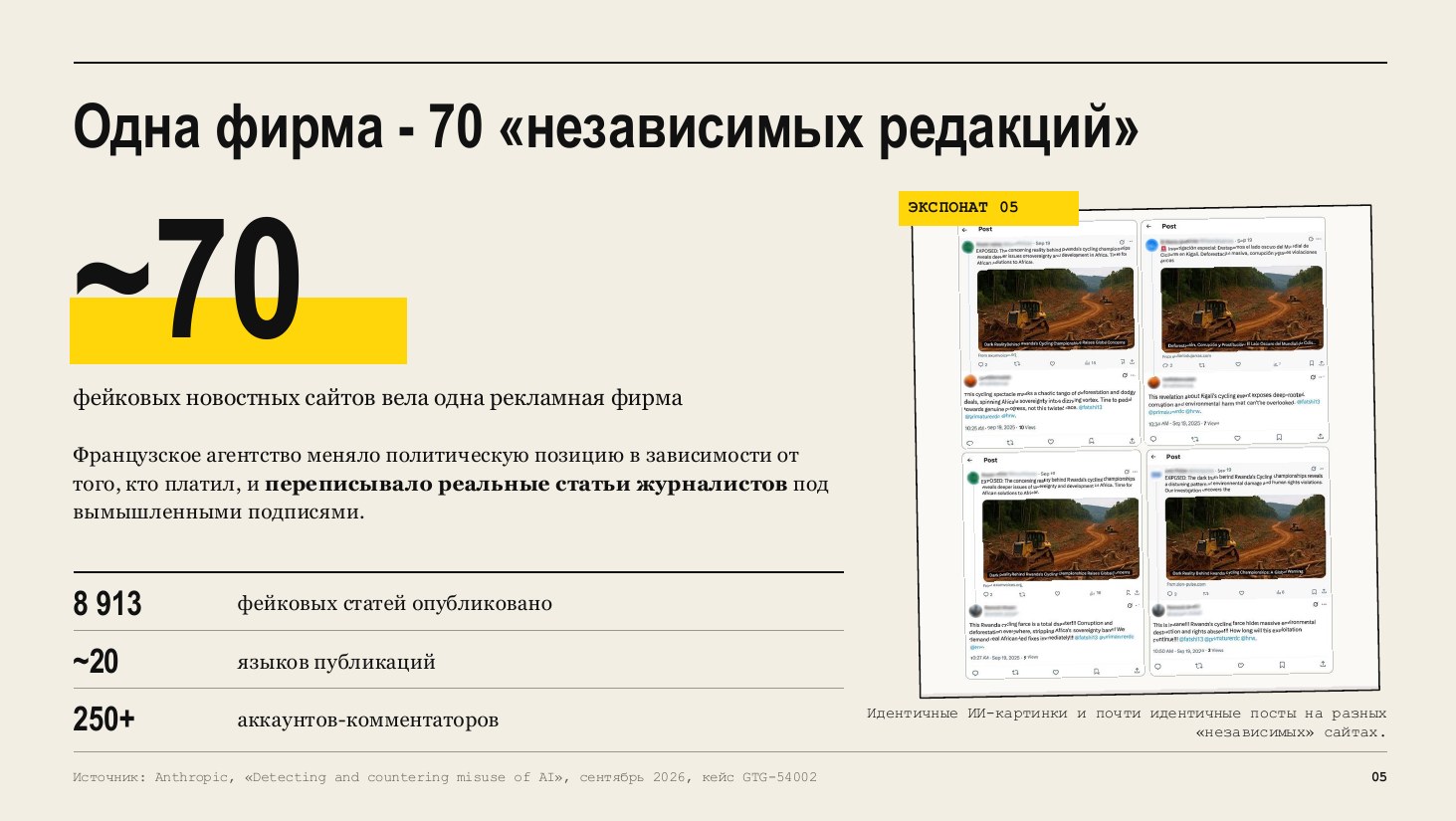
One of the most striking examples is a French agency that used AI to run about 70 fake news websites, passing them off as independent editorial offices. Nearly 9,000 articles were published on these platforms in approximately 20 languages. The positions in the materials were altered depending on who paid, and real journalists' texts were rewritten under fictitious names (Anthropic report).
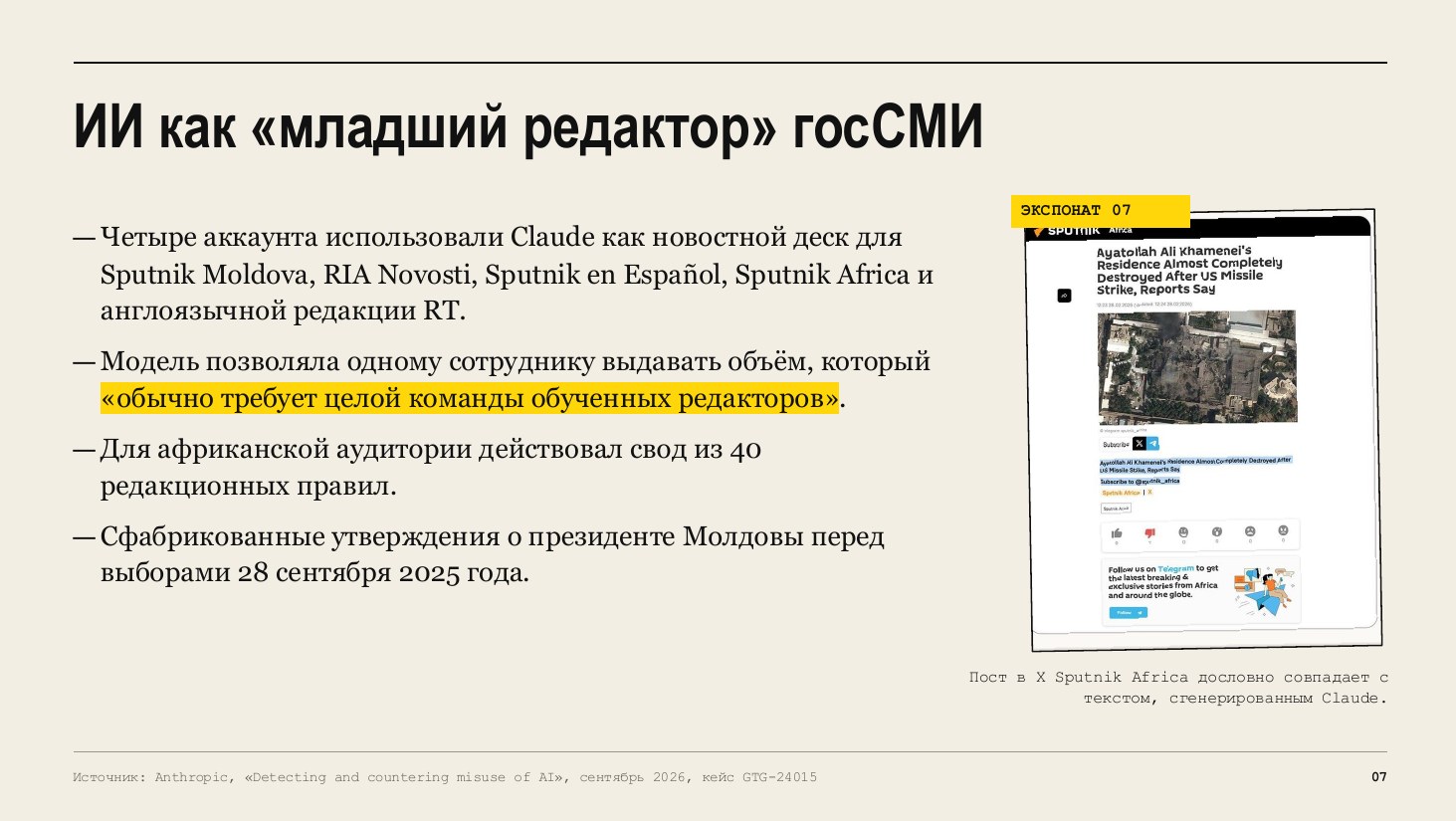
Another case involves Russian state media using AI as a "junior editor." One employee can produce output that previously required an entire team. At the same time, traces of government origin are removed from the material, and it is funneled through a chain of controlled publications to make it appear independently verified.
Surveillance of Journalists and Activists
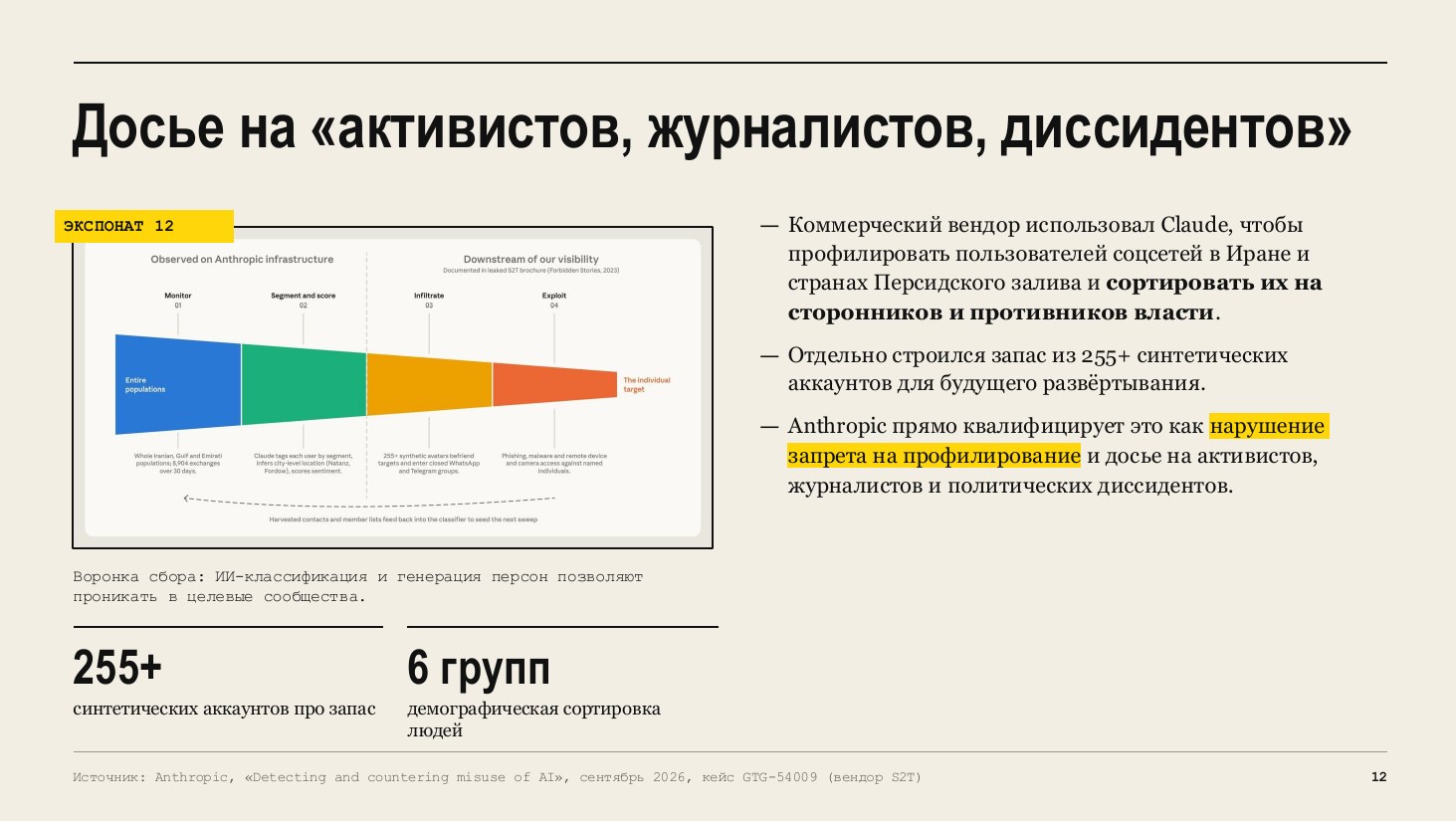
AI assists in compiling dossiers on journalists and activists, including those in diasporas. Individuals are sorted by city, age, and even by "arrest history." In Mali, for example, AI was used to monitor subscribers of 25 million SIM cards. This poses a direct risk for journalists in exile and their sources.
Attacks on Editorial Offices
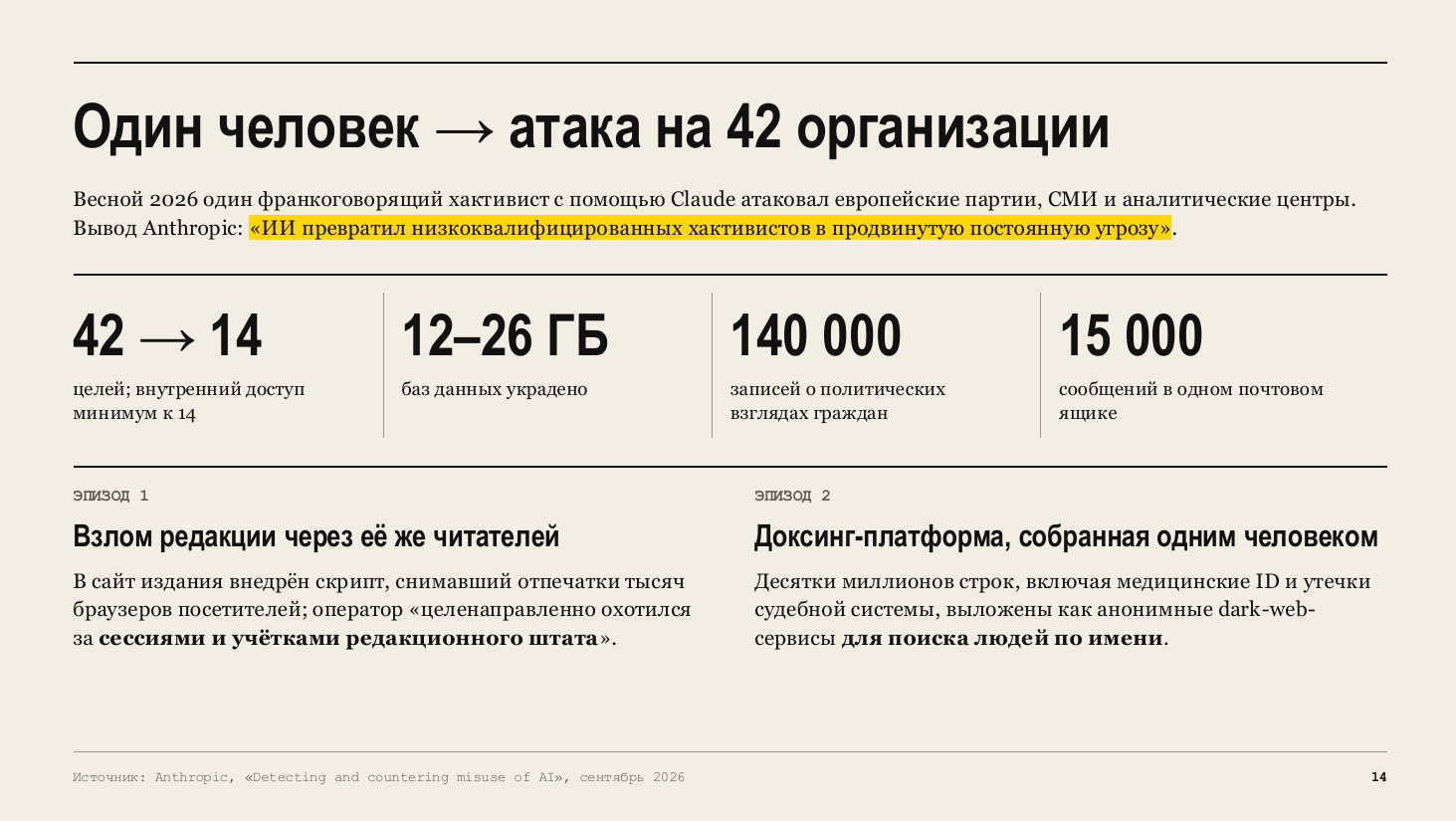
In the spring of 2026, one individual used AI to attack 42 organizations - political parties, think tanks, and media outlets. They stole databases, and on one publication's website, they implanted a script that hunted for the login credentials and sessions of editorial staff. This poses a direct threat to the safety of both sources and journalists themselves.
When AI Confidently Lies
The problem can also lie within the tool itself. AI can confidently present lies as truth. In the spring of 2026, a chatbot's hallucination nearly triggered a military operation: planes were already in the air when it was discovered that the intelligence data had been fabricated by AI (source - TechCrunch article). There is also a more subtle issue. The model filters out coherent, well-coordinated lies worse than disjointed fakes. This is also warned against in a study by the Berkeley Human Rights Center.
Impact on Journalism's Economy
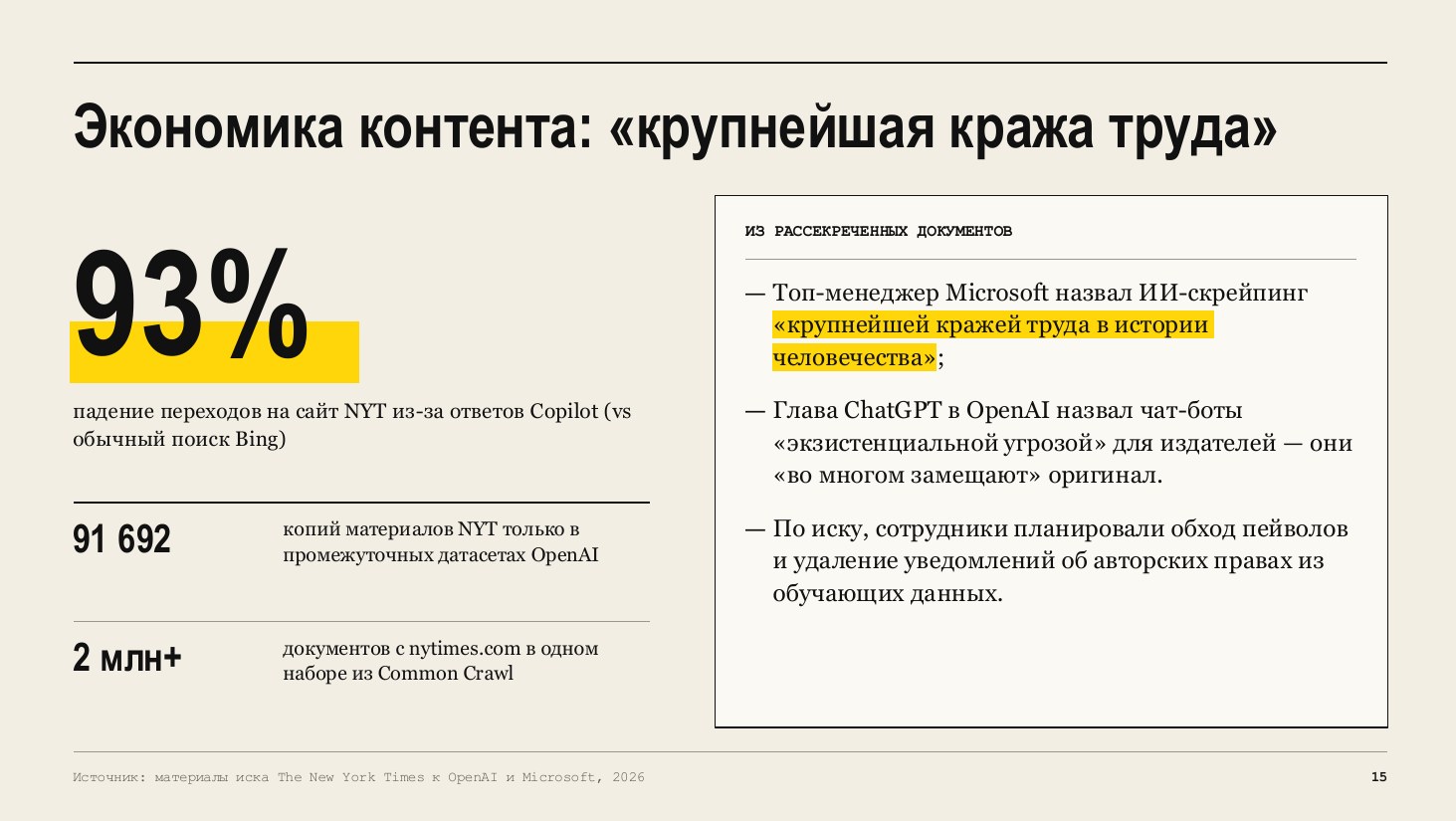
Media freedom relies, in part, on funding, and AI undermines the very funding model. According to lawsuit materials, AI reduced traffic to The New York Times' website by nearly 93 percent, meaning users receive ready-made answers from AI and no longer visit the site. A Microsoft executive referred to training on others' texts as "the largest theft of labor in history" in internal correspondence (TechCrunch investigation).
Searching for People via Cameras
Another issue that directly affects freedom of expression. In the U.S., a system has emerged that allows police to search for individuals based on text descriptions through city cameras. The category of "political and cultural expression" is the least protected. Searches in this category are not blocked by the system, only a warning is shown that can be bypassed. This way, for example, one can find out who attended protests (Wired report).
What This Means for Us
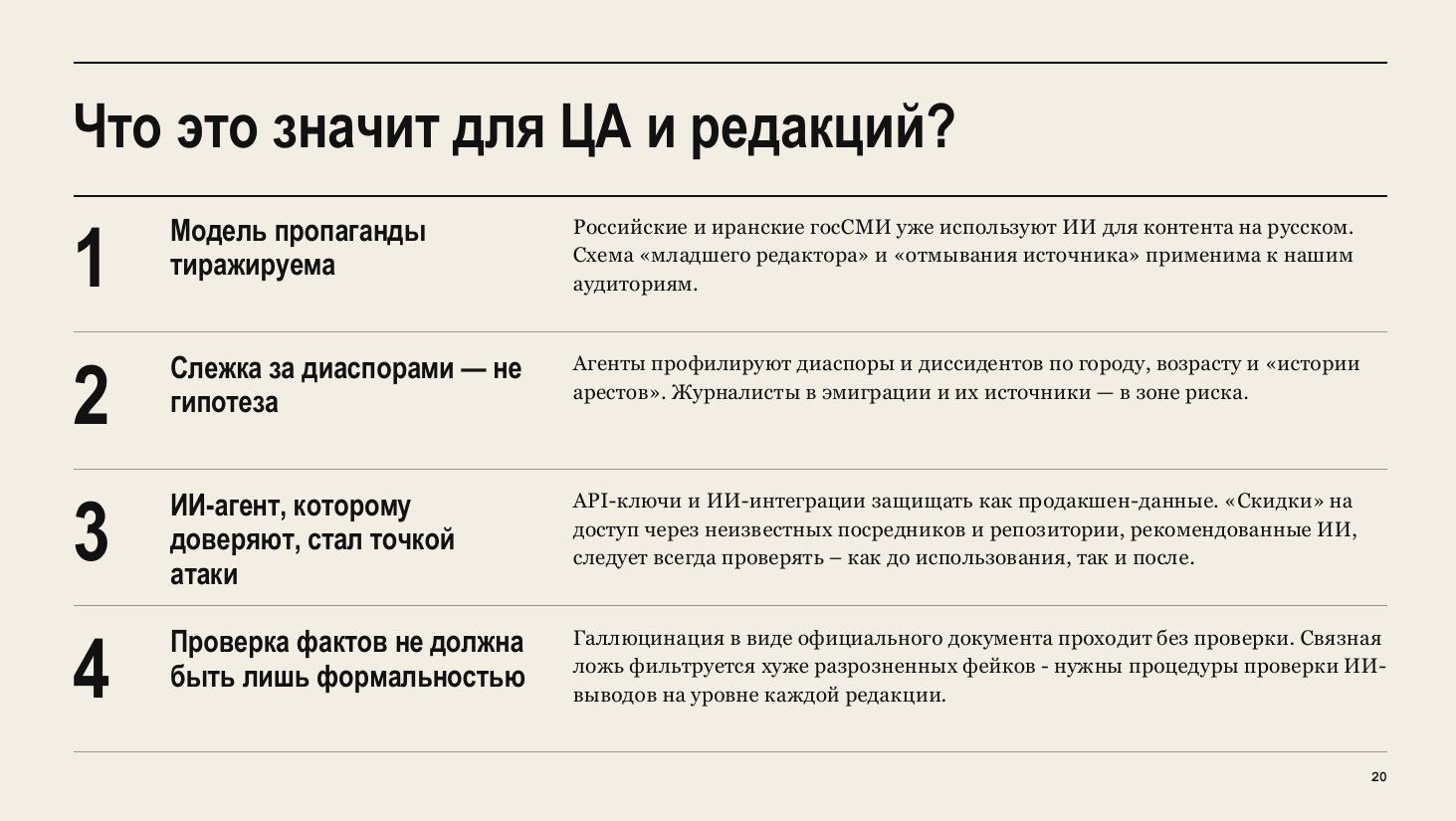
There are currently no direct Central Asian cases in these reports, but the risks are directly transferable to us. The propaganda model can easily be replicated in Russian, Tajik, or Uzbek. Processing data from many individuals is no longer a hypothesis. An AI tool trusted by an editorial office can itself become a point of entry for an attack. Fact-checking now needs to be stricter because beautifully crafted lies pass through the chain without doubts.
However, it is important to clarify that AI itself does not attack or surveil us independently. It remains a tool in the hands of other people. At the very beginning, I noted that the key factor is human intent. If a person wielding AI is guided by good intentions, AI becomes a magnificent tool that benefits many. If, however, AI falls into the hands of someone with bad intentions, it will serve them in every way possible. Ultimately, the final decision still lies with the individual, and it is up to each of us to determine how this technology will be used.
Here is the full presentation of the report:
Sources
The main sources used in preparing the presentation:
I collect news on this topic in the aggregator Semanticon.
Comments
Loading…